
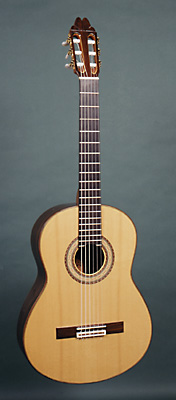
Welcome to the fantastic world of classical guitar. In this site, you will find classical guitar pieces, in midi format, for one and more guitars: actually 5641 MIDI files from 96 composers. Information on how to create midi files and a tutorial on the tablature notation system is presented. Images of ancient guitars provided.
|
|
Leo got the job. He realized that while many resources exist, finding a structured, interview-focused guide
Aminian’s book excels at the "Design" phase but is often less comprehensive regarding the "Operations" phase. A "better" preparation strategy supplements the book with MLOps principles. Modern interviews increasingly grill candidates on monitoring (drift detection), CI/CD pipelines for models, and infrastructure-as-code. A candidate who relies solely on the PDF might design a great model architecture but fail to explain how it is retrained or rolled back in production.
However, for the majority of senior-level interviews, the of Aminian’s material is unmatched. It is not a beginner’s guide to Python or a stats refresher. It assumes you know the basics and cuts straight to the system design case studies.
Which would you like next?
A common pitfall for readers of interview books is the memorization of "ideal" solutions. In reality, system design is the art of the trade-off. A "better" resource would emphasize the why over the what . For instance, Aminian might suggest using Faiss for vector similarity search. A superior understanding involves knowing when not to use it—perhaps when the dataset is too small to justify the overhead, or when exact nearest neighbors are required for compliance. The "better" candidate uses the book as a menu of options, not a blueprint.
If you want, I can:
Do not download random PDFs from sketchy Google Drive links. They are often outdated (2020 versions) or contain malware.
Candidates who have compared Aminian’s notes to giants like Alex Xu ( System Design Interview – An Insider’s Guide ) or Chip Huyen ( Designing Machine Learning Systems ) often point to three distinct advantages in Aminian’s PDF:
Composers are grouped in 6 pages: A-B;
C-F;
G-L;
M-O;
P-R; S-Z .
J.-S.
Bach , A.
Barrios Mangore , N. Coste
, M. Giuliani , F.
Sor and F.
Tarrega are on their own page
Click here
to listen to 20 great MIDI from the site
Composers in alphabetical order
Leo got the job. He realized that while many resources exist, finding a structured, interview-focused guide
Aminian’s book excels at the "Design" phase but is often less comprehensive regarding the "Operations" phase. A "better" preparation strategy supplements the book with MLOps principles. Modern interviews increasingly grill candidates on monitoring (drift detection), CI/CD pipelines for models, and infrastructure-as-code. A candidate who relies solely on the PDF might design a great model architecture but fail to explain how it is retrained or rolled back in production.
However, for the majority of senior-level interviews, the of Aminian’s material is unmatched. It is not a beginner’s guide to Python or a stats refresher. It assumes you know the basics and cuts straight to the system design case studies. Leo got the job
Which would you like next?
A common pitfall for readers of interview books is the memorization of "ideal" solutions. In reality, system design is the art of the trade-off. A "better" resource would emphasize the why over the what . For instance, Aminian might suggest using Faiss for vector similarity search. A superior understanding involves knowing when not to use it—perhaps when the dataset is too small to justify the overhead, or when exact nearest neighbors are required for compliance. The "better" candidate uses the book as a menu of options, not a blueprint. It is not a beginner’s guide to Python
If you want, I can:
Do not download random PDFs from sketchy Google Drive links. They are often outdated (2020 versions) or contain malware. If you want
Candidates who have compared Aminian’s notes to giants like Alex Xu ( System Design Interview – An Insider’s Guide ) or Chip Huyen ( Designing Machine Learning Systems ) often point to three distinct advantages in Aminian’s PDF:
Note to MIDI sequence contributors
Your submissions are welcomed.
Please send them by e-mail (end of text). Pieces
should bear the composer's name and be properly identified.(ex.: J.K. Mertz (1806-1856) Nocturne
Op.4 No.2.). The submissions
should bear information on the transcriber or arranger when available. The submitter's name
will appear beside the accepted submission.
This site exists primarily to showcase pieces written for the classical
guitar. Established and recognized transcriptions and arrangements (e.g.,
Tarrega, Segovia,..) of pieces written by non-guitar composers will also be given
high priority.
New compositions for the classical guitar are also welcomed. New
compositions that meet quality guidelines will be added to the site. For
new contributors, it would be appreciated if you would also submit several
pieces by known composers in addition to your own compositions. This will
help to expand the repertoire of established works for the classical guitar in
addition to expanding the repertoire of new music.
Last update: March 8 2026
Copyright François Faucher 1998-2025
 G.F.Handel's Sonata 2. Allegro
3.Adagio HWV368
G.F.Handel's Sonata 2. Allegro
3.Adagio HWV368